



Kiteboards for kitesurfing — find the right board at Frozen Palm Tree
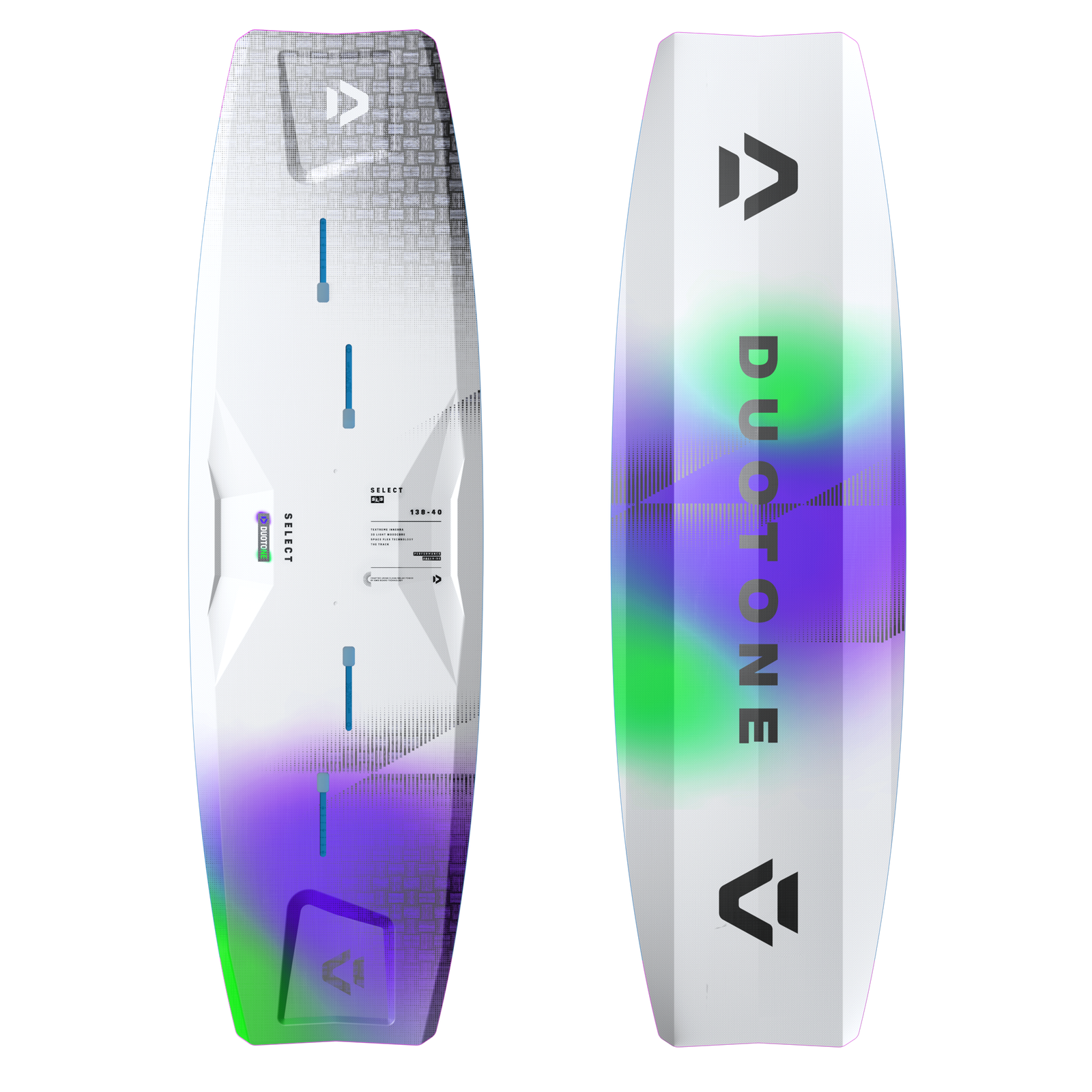
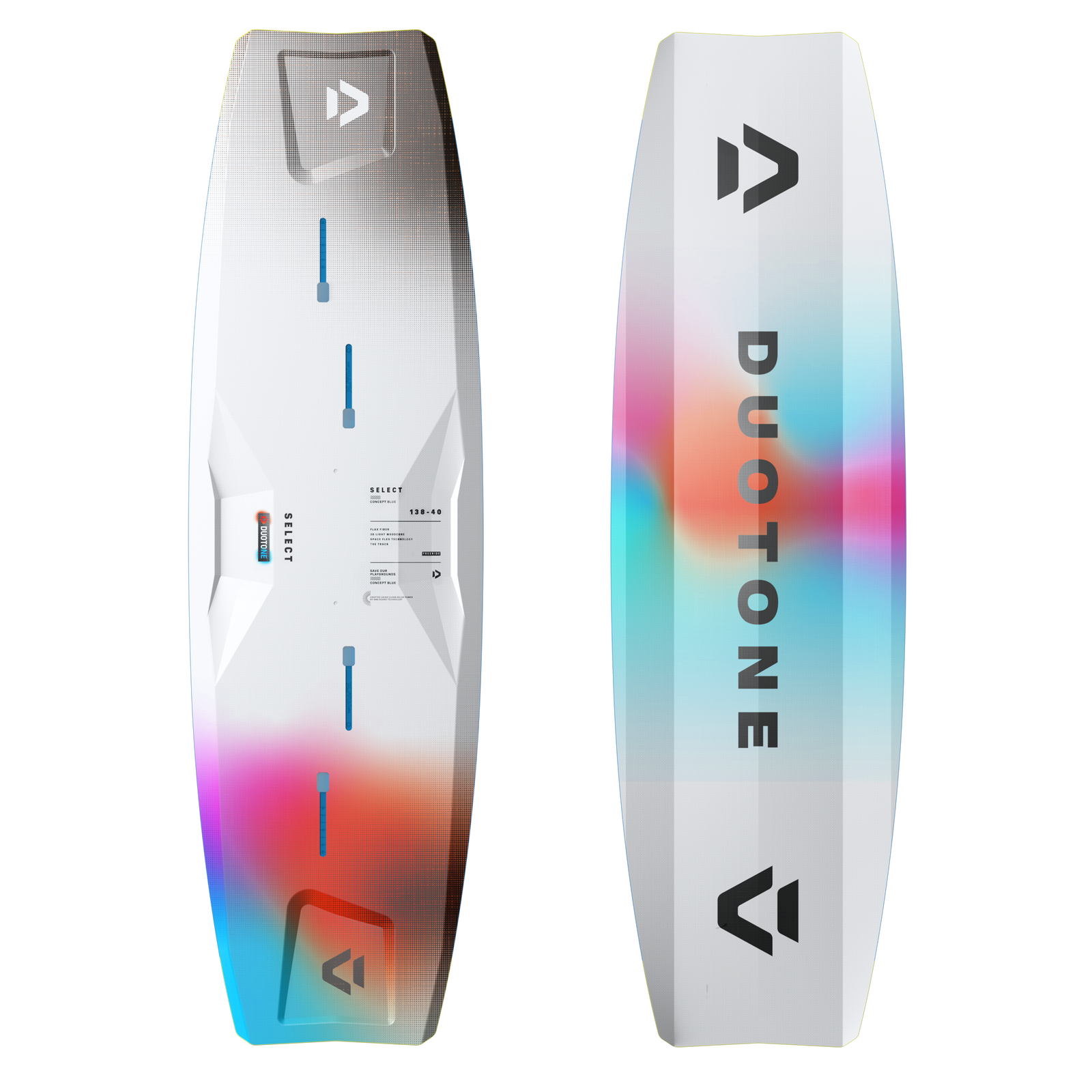
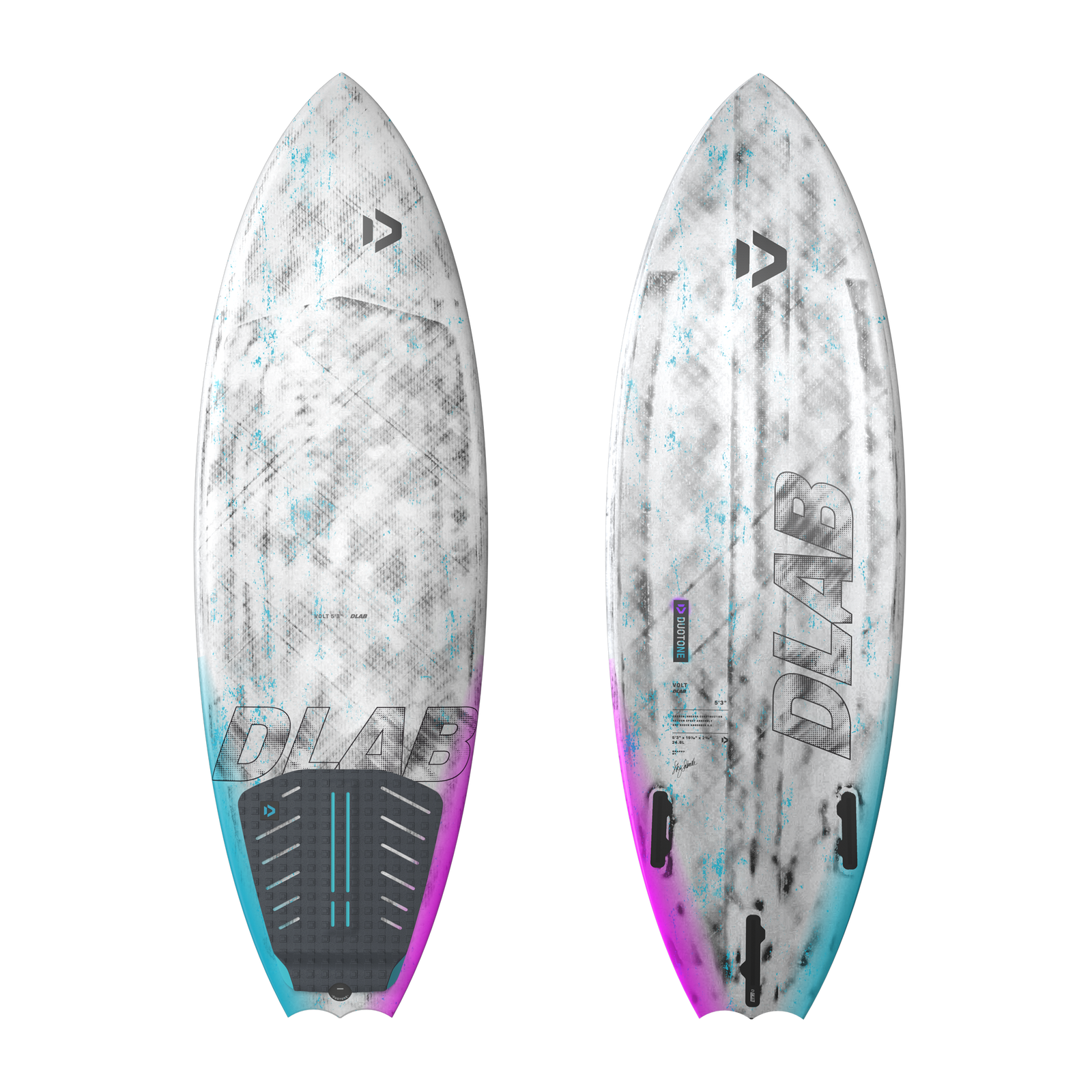
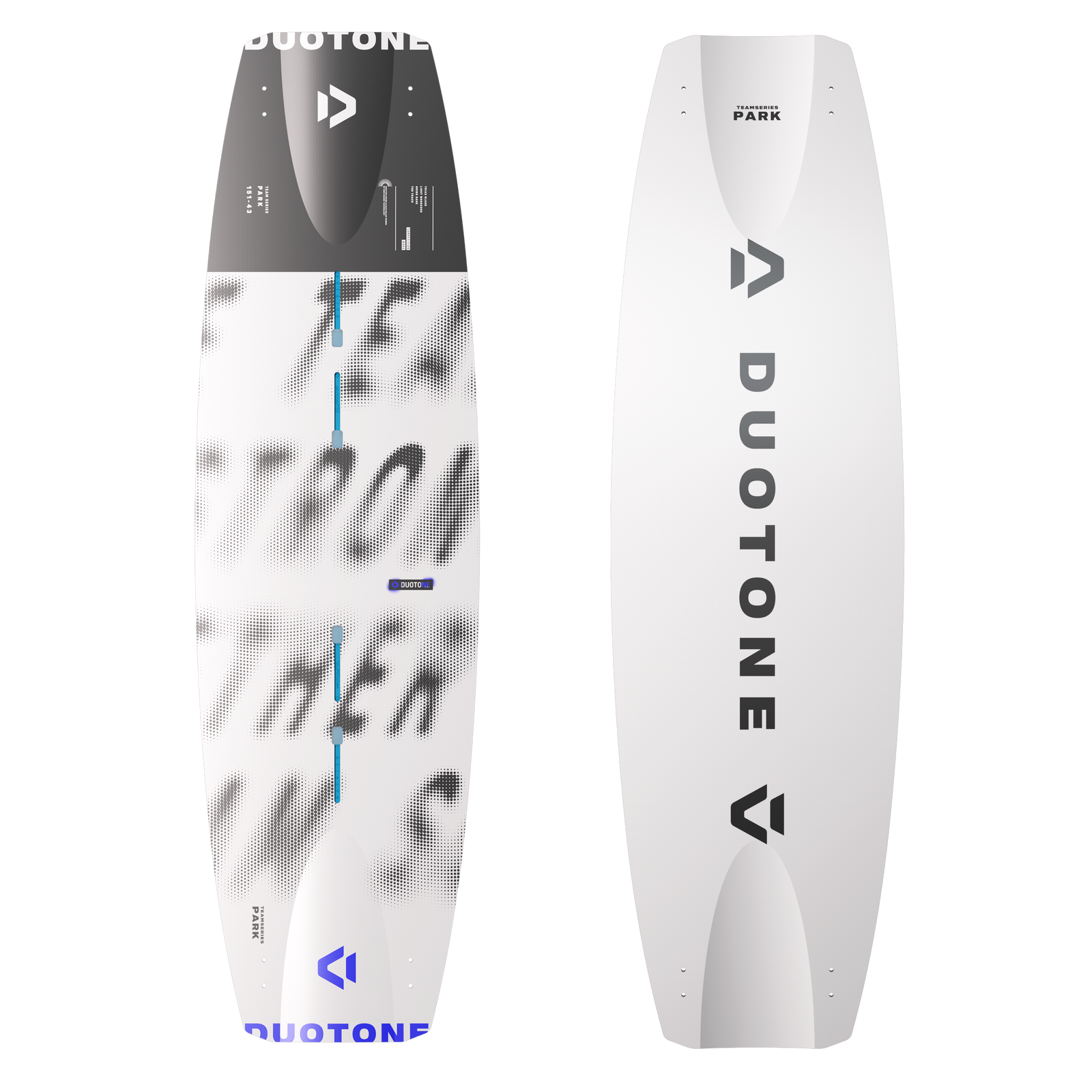
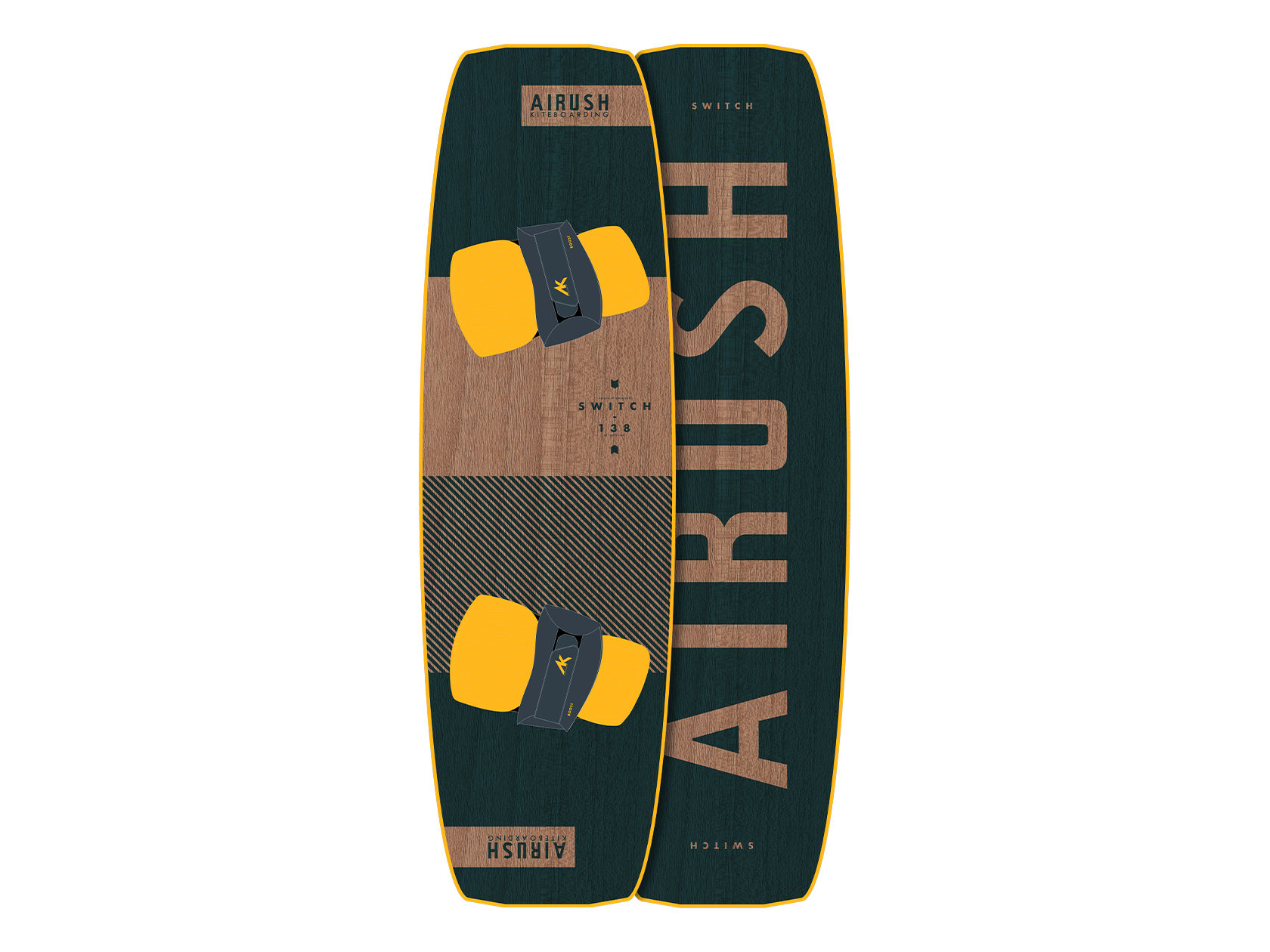
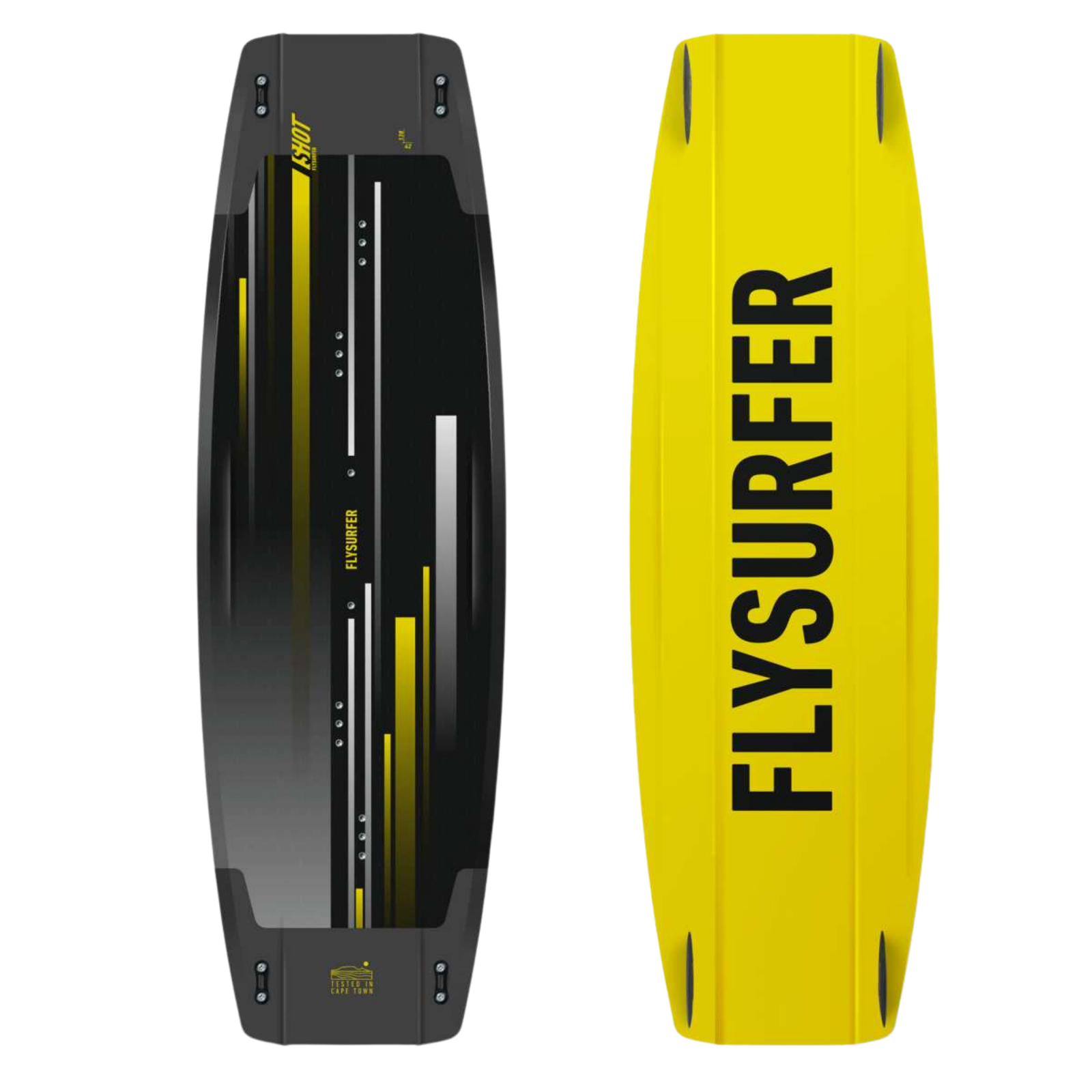
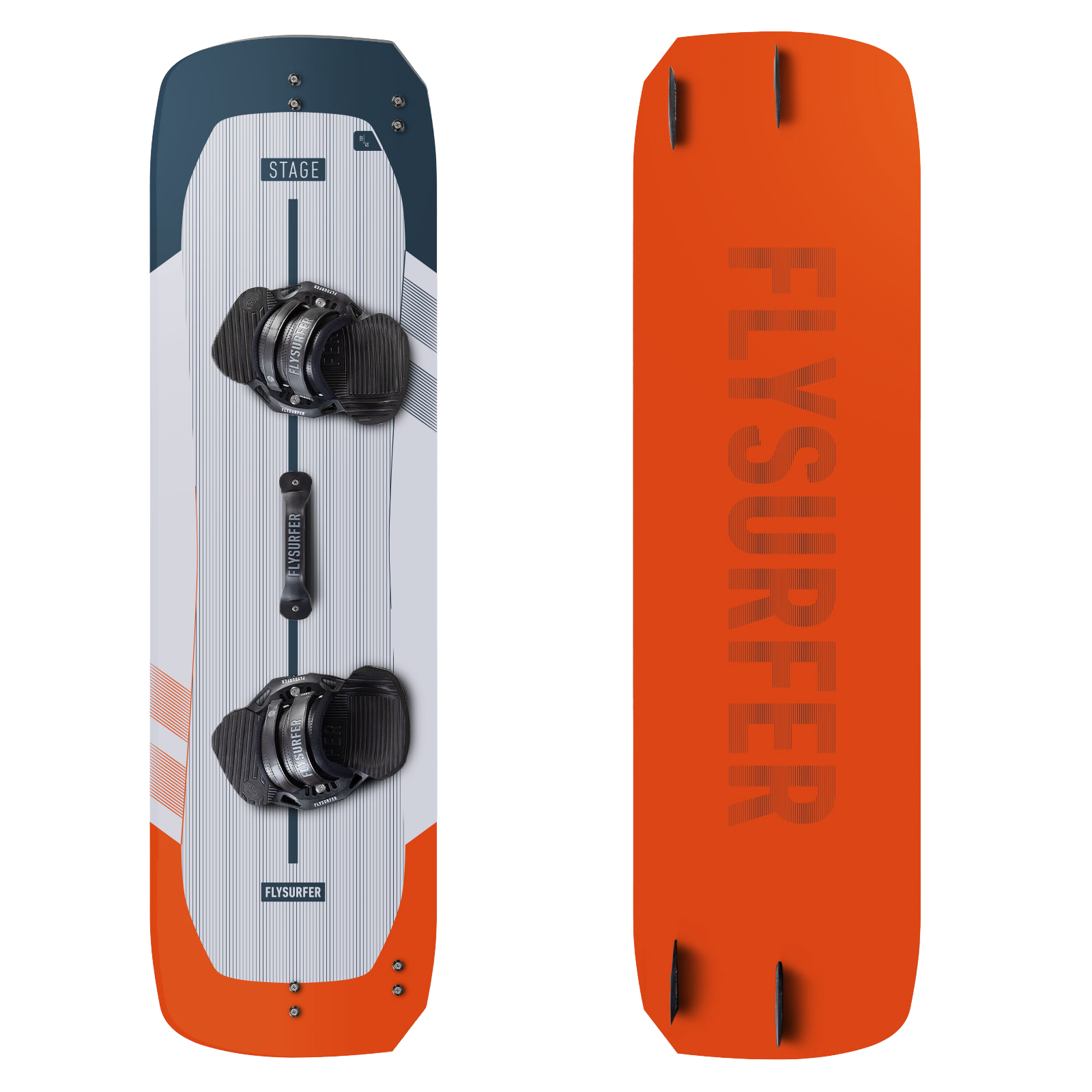
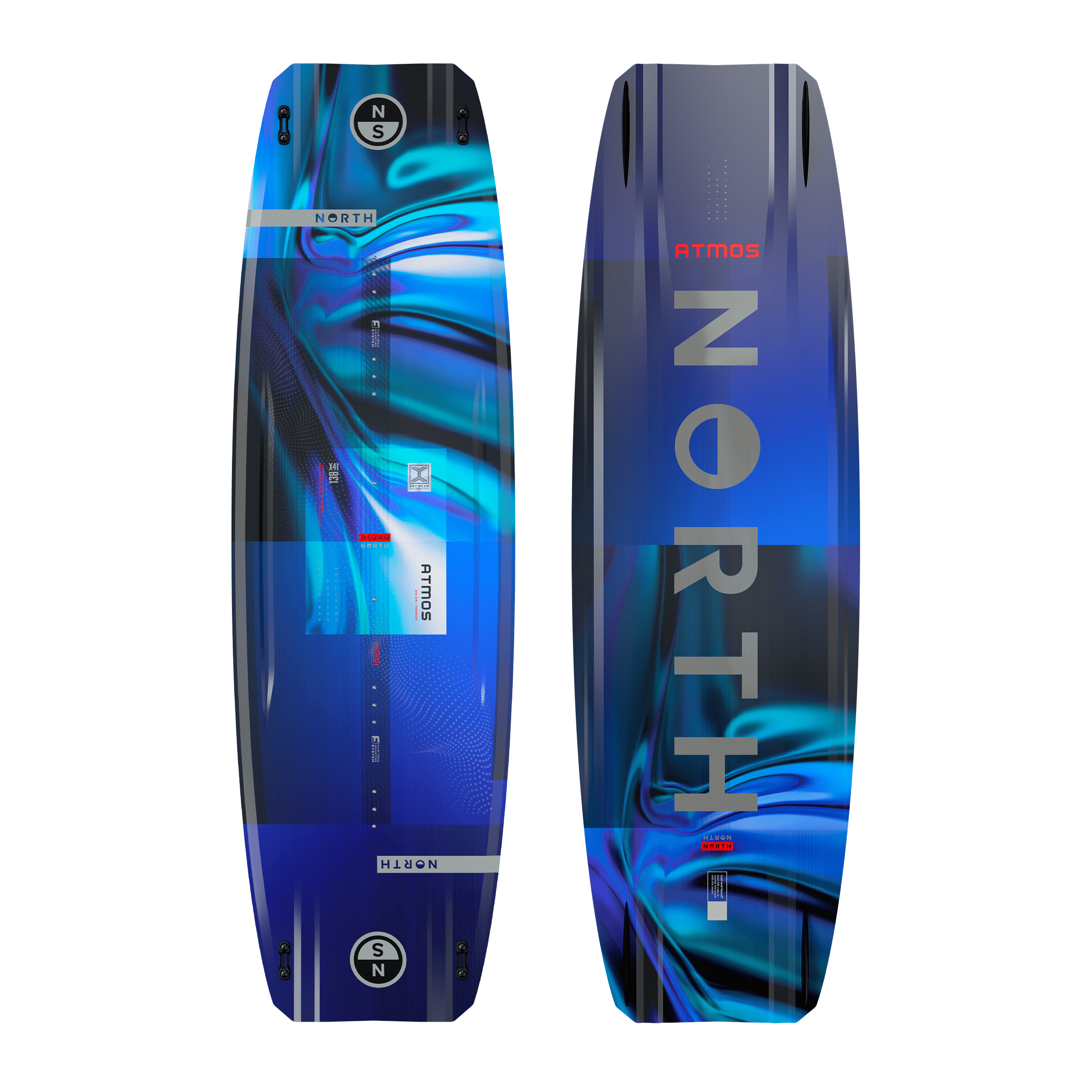
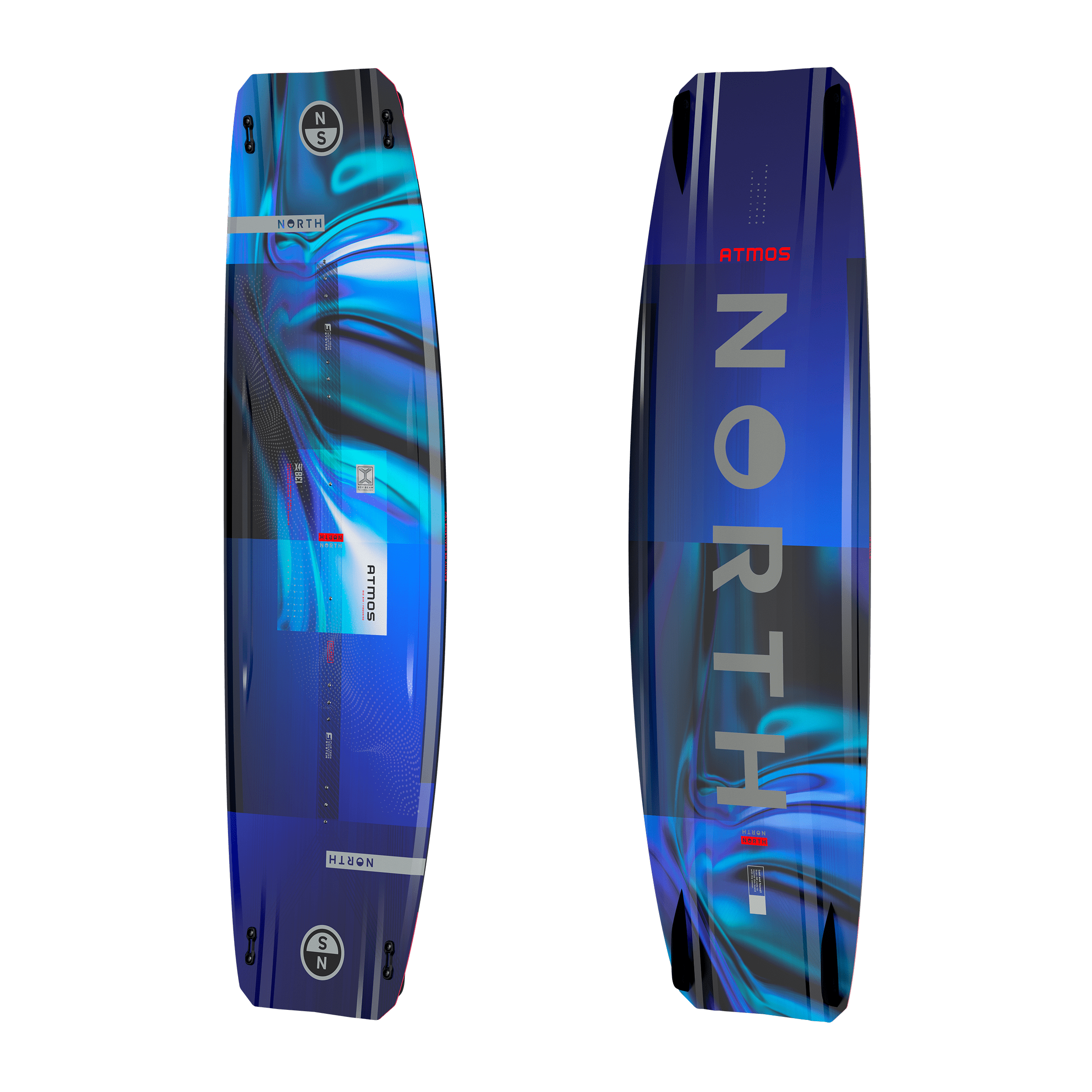
Buying a kiteboard is easy and fast at Frozen Palm Tree. Whether it's your next twintip or a directional surfboard, we always have a wide range of kiteboards for all riding styles. For the twintip kitesurfer, we stock boards for freeride, freestyle, big air and light wind. The dedicated wave rider can find directionals in many constructions and shapes. We sell twintip and directional kiteboards from all the major brands, including North, Duotone, Airush and Flysurfer. With such a large selection, it can sometimes be difficult to find your perfect board — that's why we've compiled the most frequently asked questions about buying a kiteboard. Still have questions? Call us on +45 53 53 16 83, drop us a WhatsApp, or visit our shop at Amager Strandvej 130N.
Frequently asked questions about kiteboards:
- What are the different types of kiteboards?
- What is the difference between a twintip and a directional kiteboard?
- What is the best kiteboard for me?
- What is the best kiteboard for beginners?
- What size kiteboard do I need?
- What is included with my new kiteboard?
- Which brands does Frozen Palm Tree carry?
What are the different types of kiteboards?
Kiteboards come in many different shapes and sizes. At the beginning you might not think much about this, but the more time you spend on the water, the faster you develop your own preferences and style. Then it's time to find a board that suits you! We have divided kiteboards into two main groups: twintips and directionals.
- Twintips: freeride, freestyle, lightwind, wakestyle, big air
- Directionals (surfboards): surf/waves, race, hydrofoil
Twintips are ridden with both feet forward without turning the board — it may feel unnatural at first, but twintips are by far the most widely used board type because they give you maximum freedom while freeriding. A twintip is typically completely symmetrical, so there are two "fronts". A directional, on the other hand, is designed to ride in one direction. If you want to jibe, you turn the entire board. Directionals are mainly used for wave riding or racing and are asymmetrical in shape.
Within these two groups, a further distinction is made between riding styles: beginner, freeride, freestyle, lightwind, wakestyle, surf and race — and for each purpose there is a board designed specifically for it.
What is the difference between a twintip and a directional kiteboard?
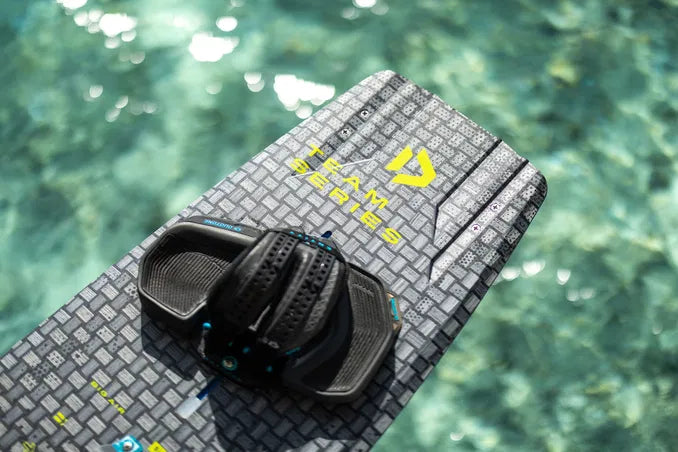
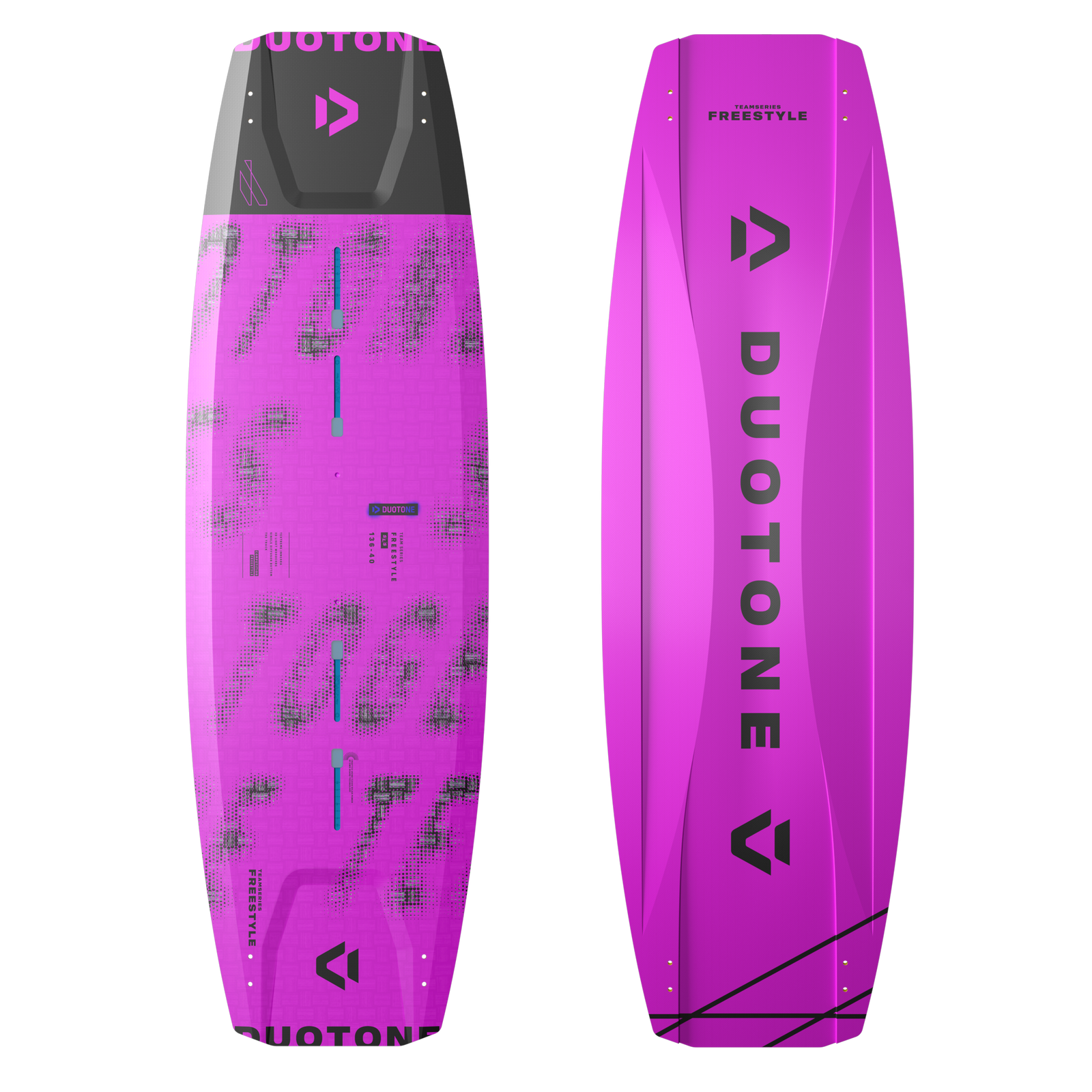
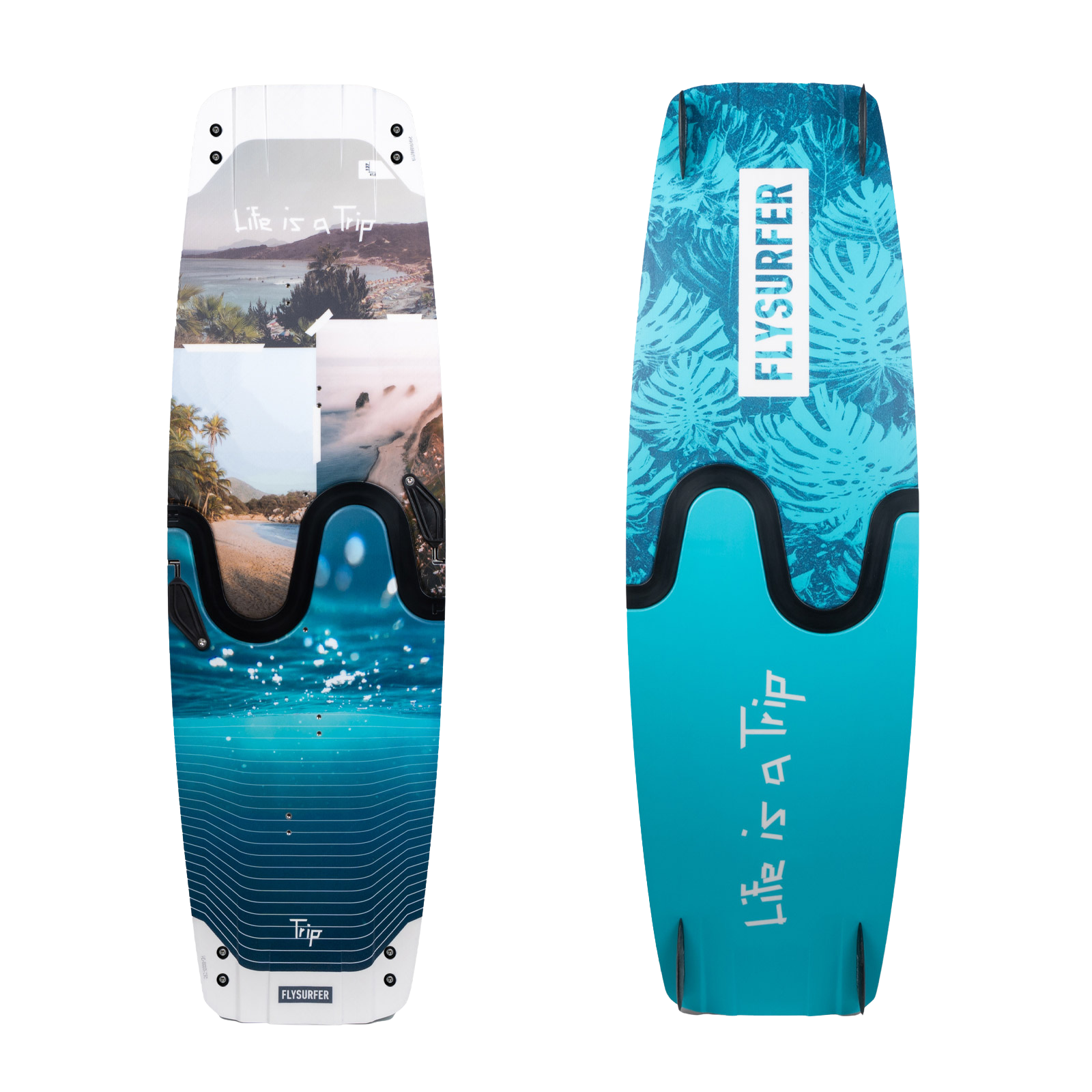
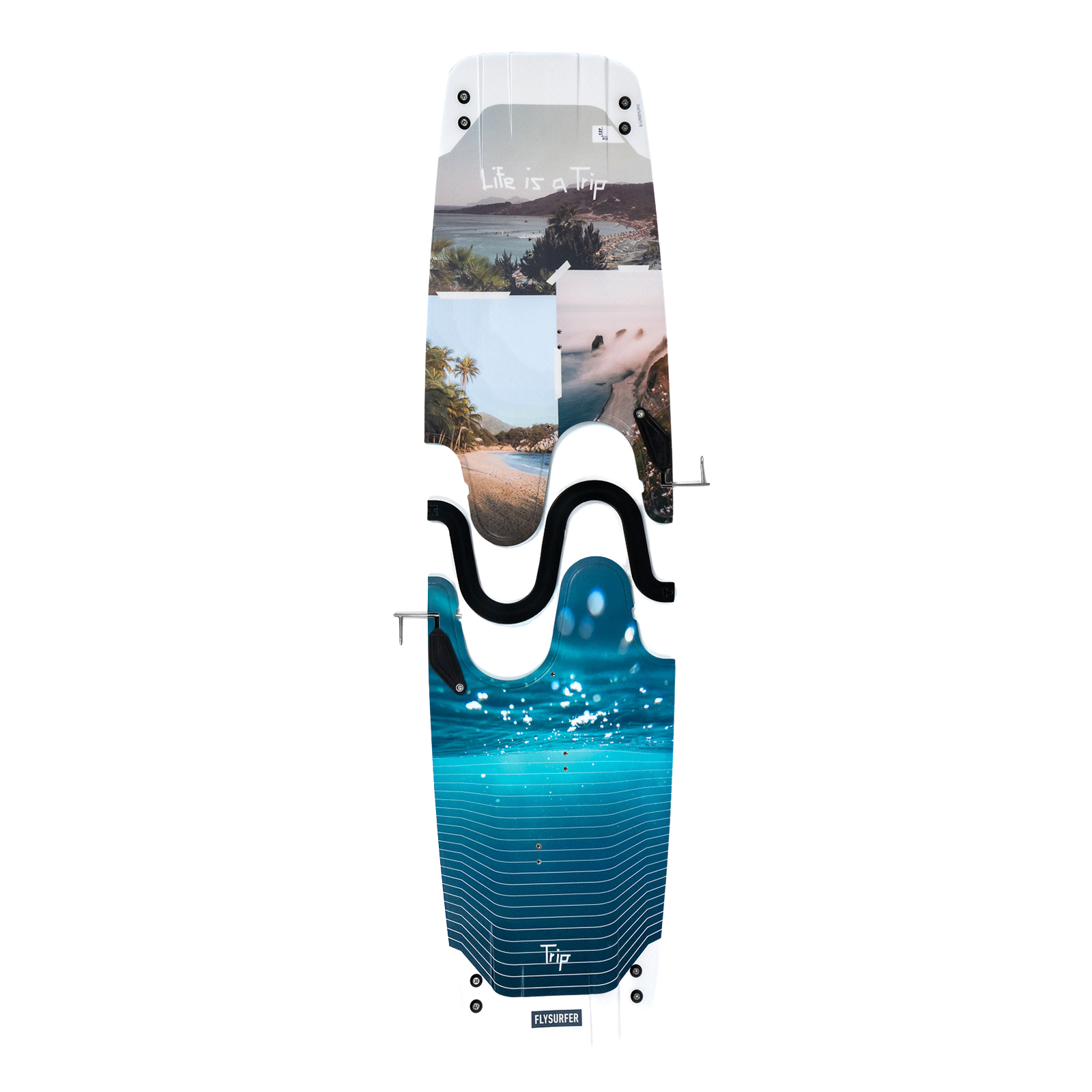
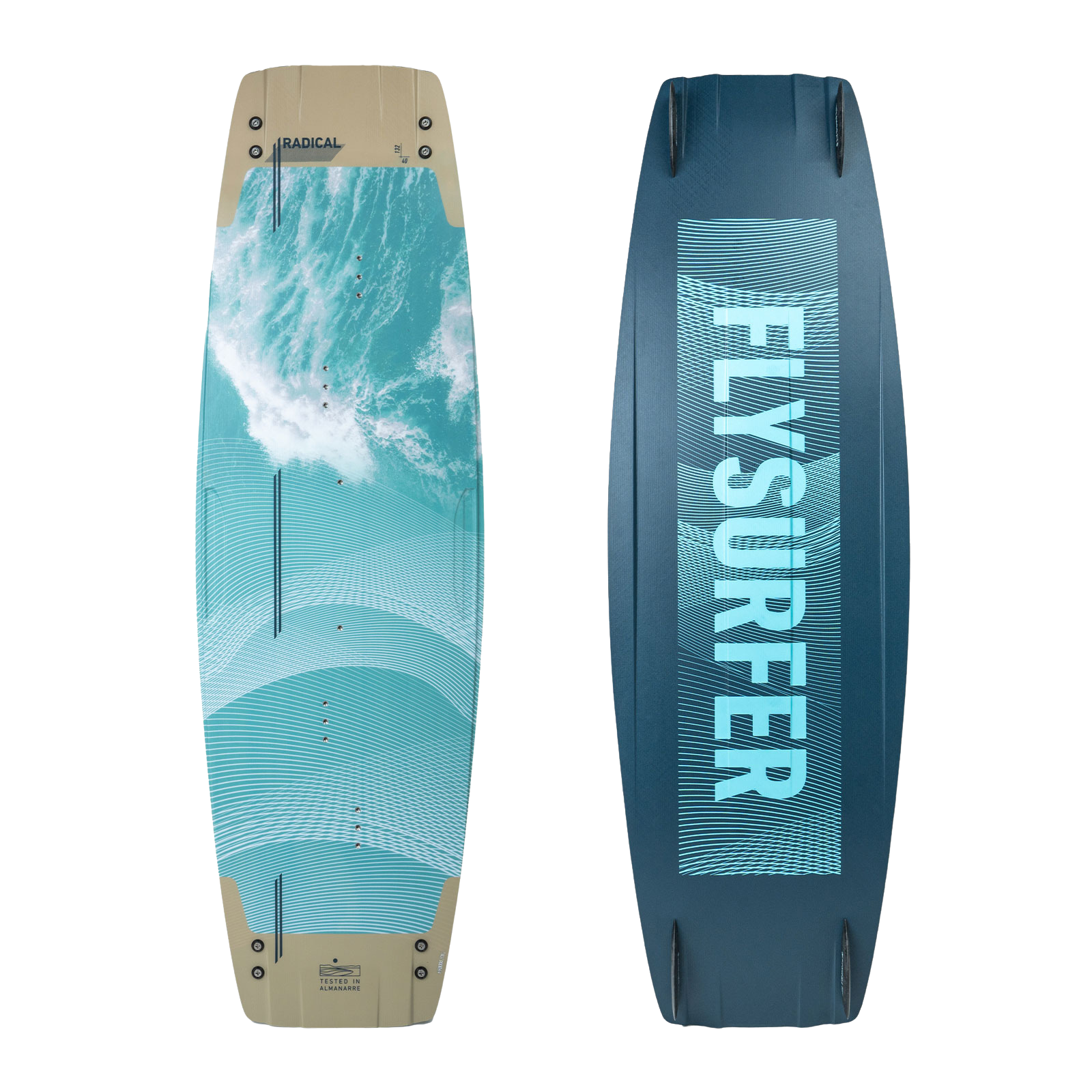
There is a big difference between the two. A twintip is the board you learn kitesurfing on and is found in almost every kitesurfer's quiver. The twintip has a symmetrical shape with two bindings and four fins. With a twintip you can easily ride upwind, make high jumps and do unhooked tricks. Twintips are available for freeride, freestyle, wakestyle, lightwind and big air.
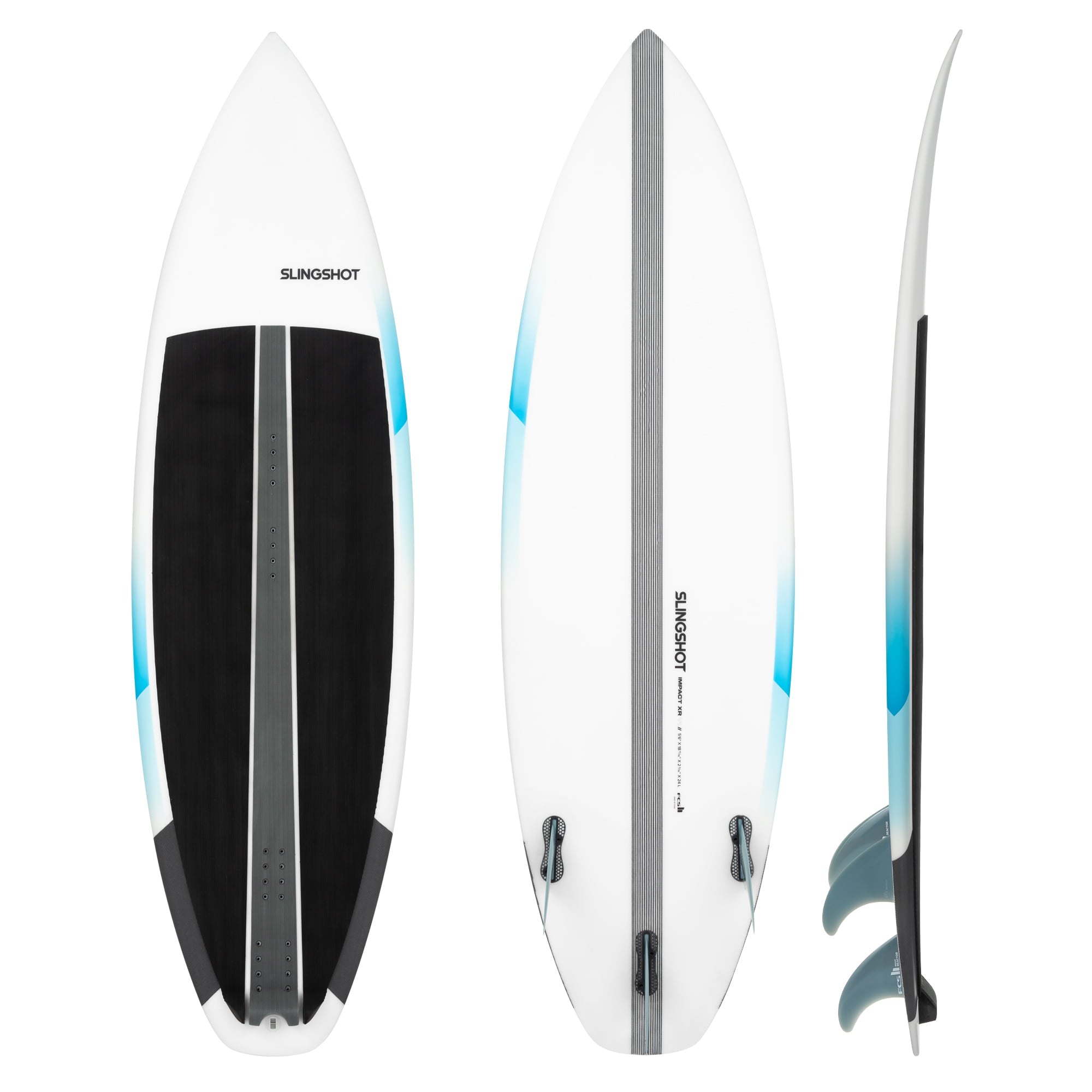
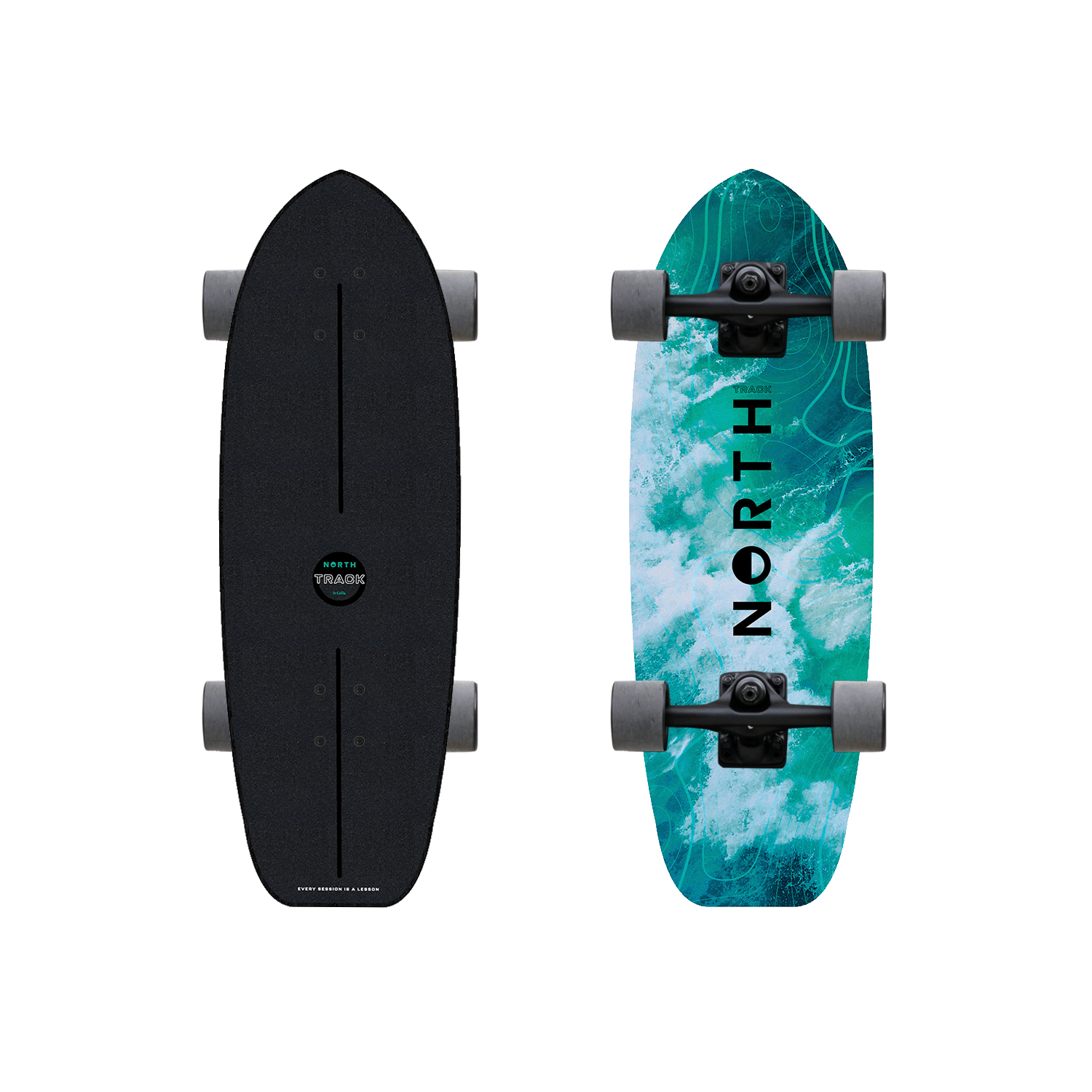
A directional is used by kitesurfers who love nothing more than playing with the waves. It resembles a surfboard and is used mainly for wave riding, strapless freestyle or light wind kitesurfing. The biggest difference from a twintip is that directionals are asymmetrical and only have one front.
A foil kiteboard — also known as a foilboard or hydrofoil board — is designed to be used with a hydrofoil. The foil is mounted with a mast under the board and lifts it out of the water as speed increases. Foilboards typically have a minimalist design with a long, narrow profile to reduce water resistance and maximise efficiency. They are often made from lightweight materials such as carbon fibre. Like directionals, foilboards are asymmetrical and therefore have a fixed front.
What is the best kiteboard for me?
It depends on several factors. First and foremost, it's important to know whether you want to ride waves (directional), do freeriding and tricks (twintip) or foil (foilboard). Your level also plays a major role. As a beginner, you need a board with different characteristics than an experienced kitesurfer — and this comes down to specific technical factors such as rocker, flex, channels and size.
As a beginner, you always start on a twintip. A twintip rides upwind easily and you don't need to change the position of your feet when changing direction. It's also important to choose the right size: as a beginner, always go one size larger than you normally would. This makes waterstarting and riding upwind easier. A person weighing 80 kg would normally ride a board of about 136–138 cm, but as a beginner, 140–144 cm is a good idea. Contact us for personalised advice — we'll find the right board for you.
What is the best kiteboard for beginners?
As a beginner kitesurfer you start on a twintip — and three factors are especially important:
- Rocker: Choose a board with little rocker. Rocker is the curvature of the board — a board with little rocker is nearly flat, making it easier to build speed and ride upwind.
- Flex: Choose a board with good flex. Flex refers to the board's flexibility — the more flex, the more comfortable and forgiving the board rides. Ideal for beginners.
- Size: Choose a board that is one size larger than normal. A larger board gives more stability, easier waterstarting and easier upwind riding. A beginner weighing 80 kg typically starts on a board of 140–144 cm.
Contact us for personalised advice — we'll help you find the perfect first board.
What size kiteboard do I need?
Size is crucial — for both twintips and directionals. The right size depends on your level, your favourite discipline and your weight.
For twintips: beginners choose a size larger than normal to gain more stability and easier upwind riding. As you improve, you can choose a board that matches your riding style more precisely. A big air kiter typically wants a board with not too much rocker, plenty of channels and not too large a size. A freestyle kiter, on the other hand, wants more rocker and a slightly larger size. An experienced kitesurfer weighing 80 kg typically rides a board of about 138 cm, and at 75 kg about 136 cm — but this varies depending on the board and riding style.
For directionals, the size choice is slightly more complex, as volume plays an additional role. As a beginner, choose a directional with a bit more volume. If you ride aggressively on large waves, you'll want a directional with less volume and a narrower outline for easier top and bottom turns. Contact us for personalised advice.
What is included with my new kiteboard?
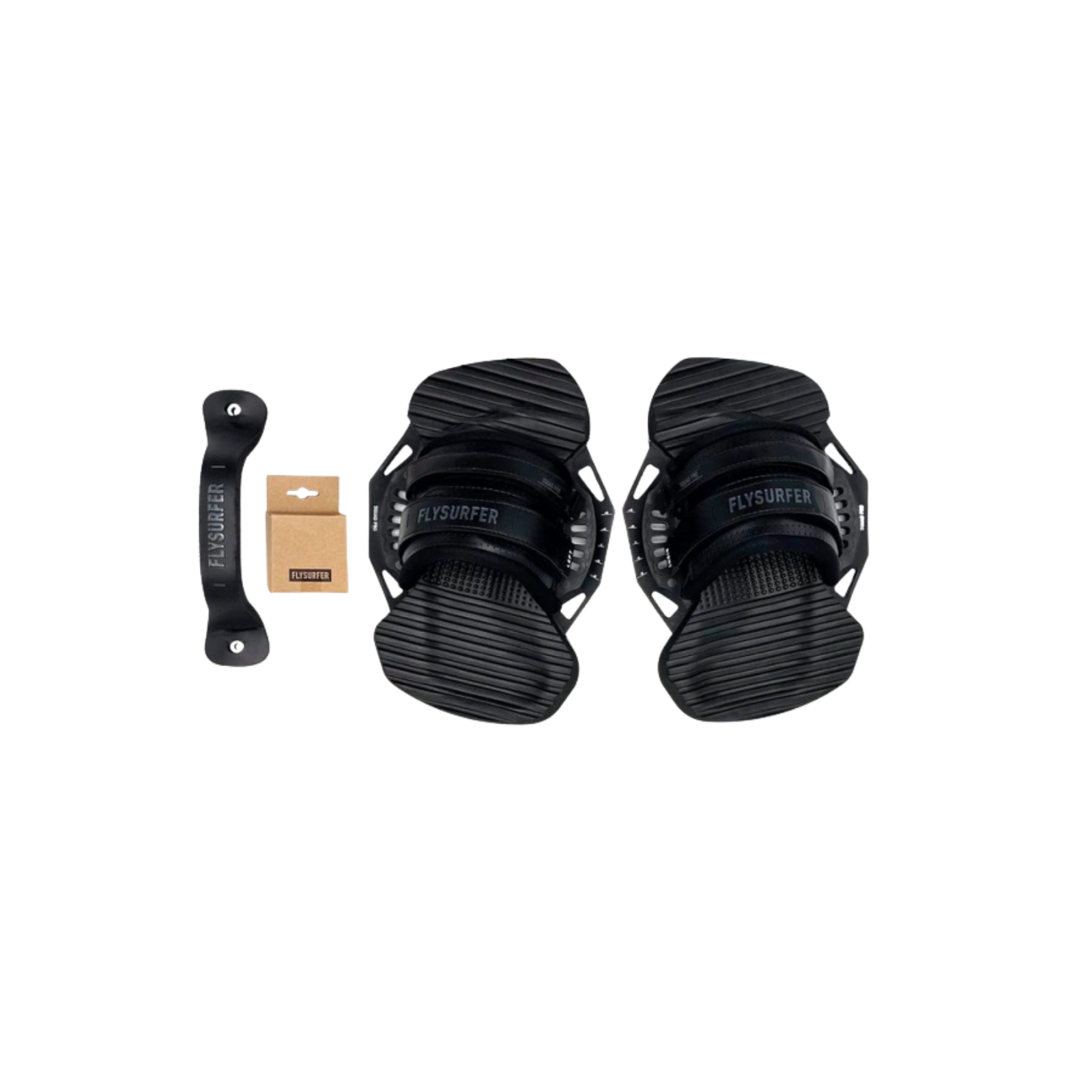
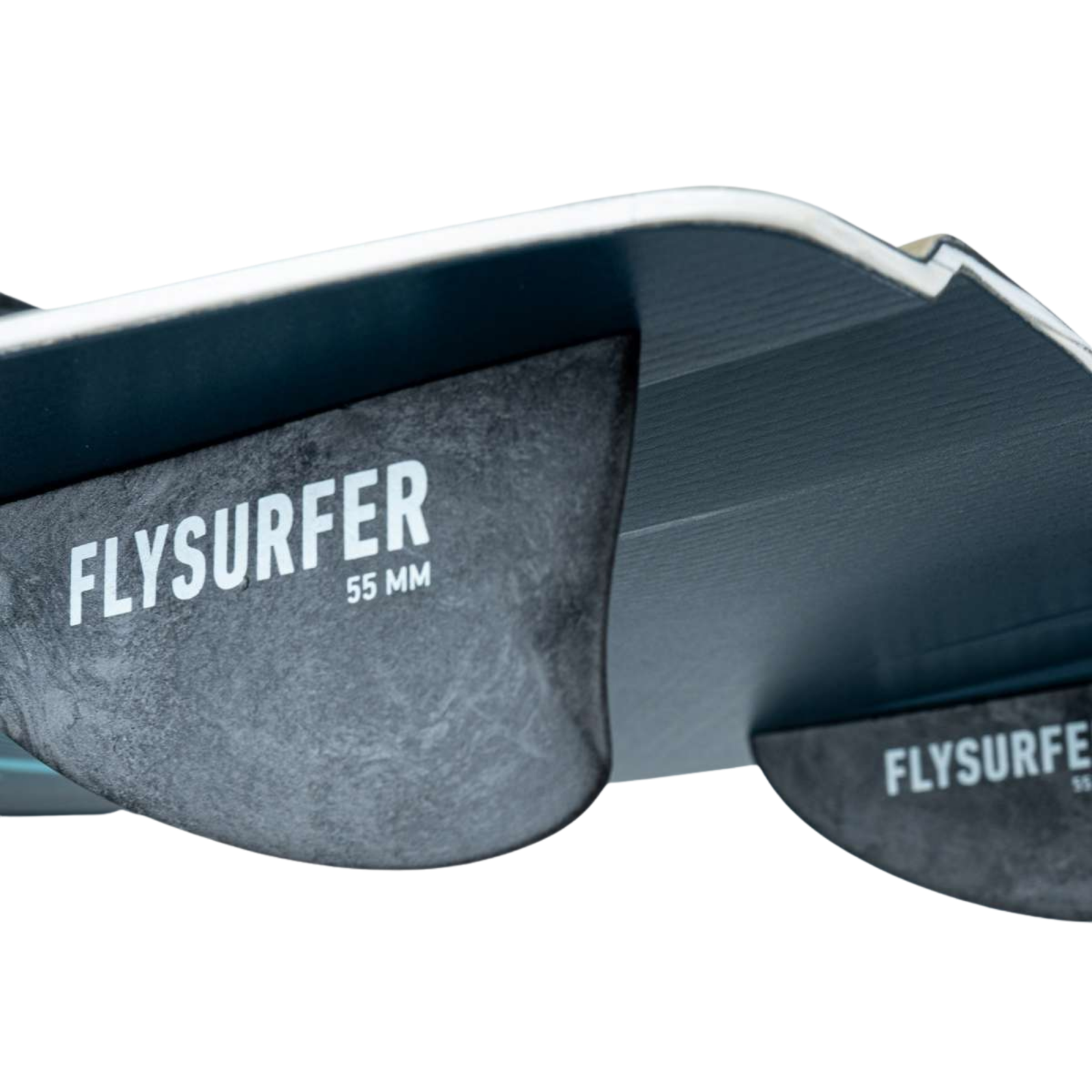
All twintips at Frozen Palm Tree come with fins and a grab handle included. The size of the fins is determined by the manufacturer to get the best out of the board. A larger fin provides more grip and makes it easier to ride upwind, while a smaller fin offers greater manoeuvrability.
Most directional surfboards are sold without fins, as fin choice is very personal. Some kiters prefer large, stiff fins, others prefer small, flexible ones. The product description will indicate whether fins are included.
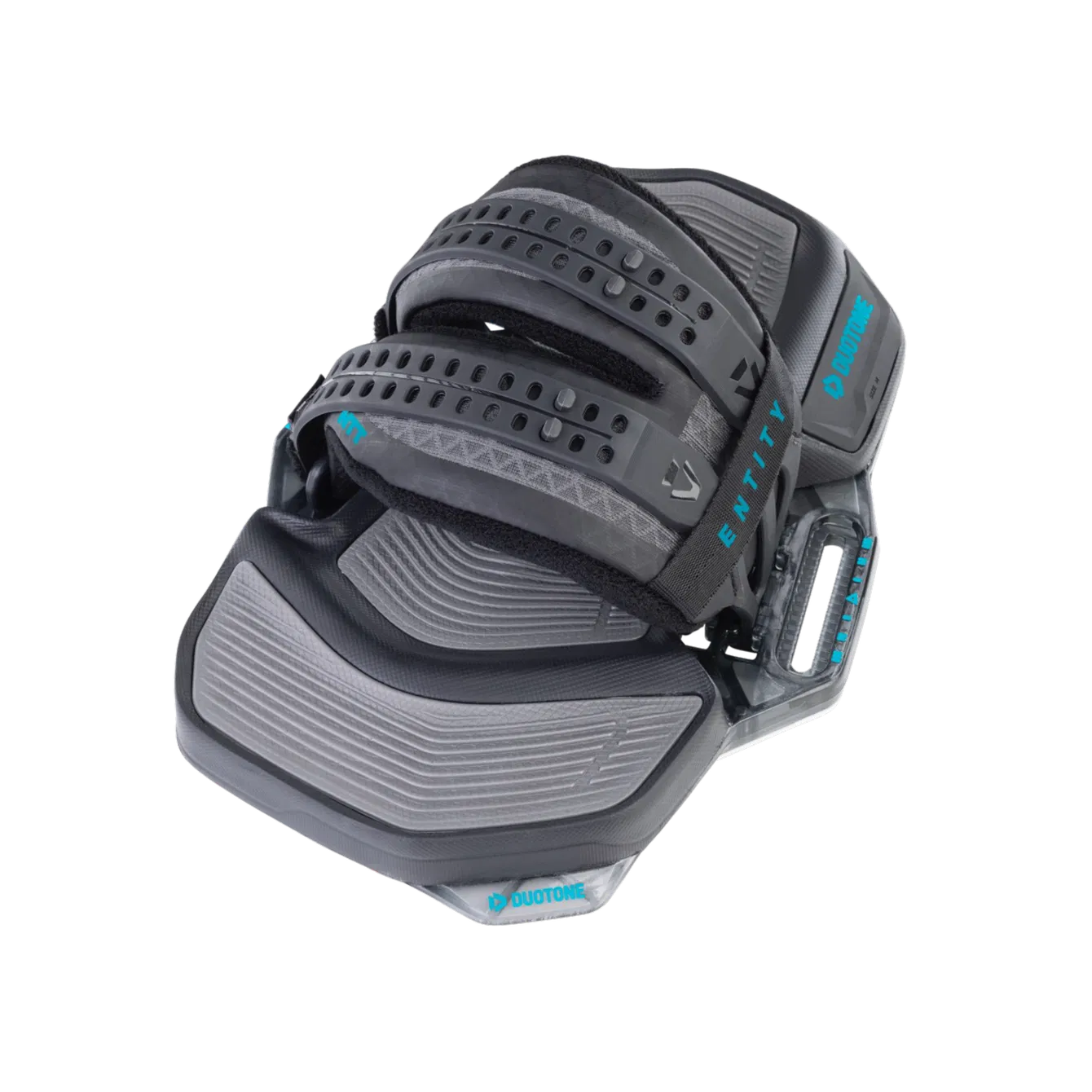
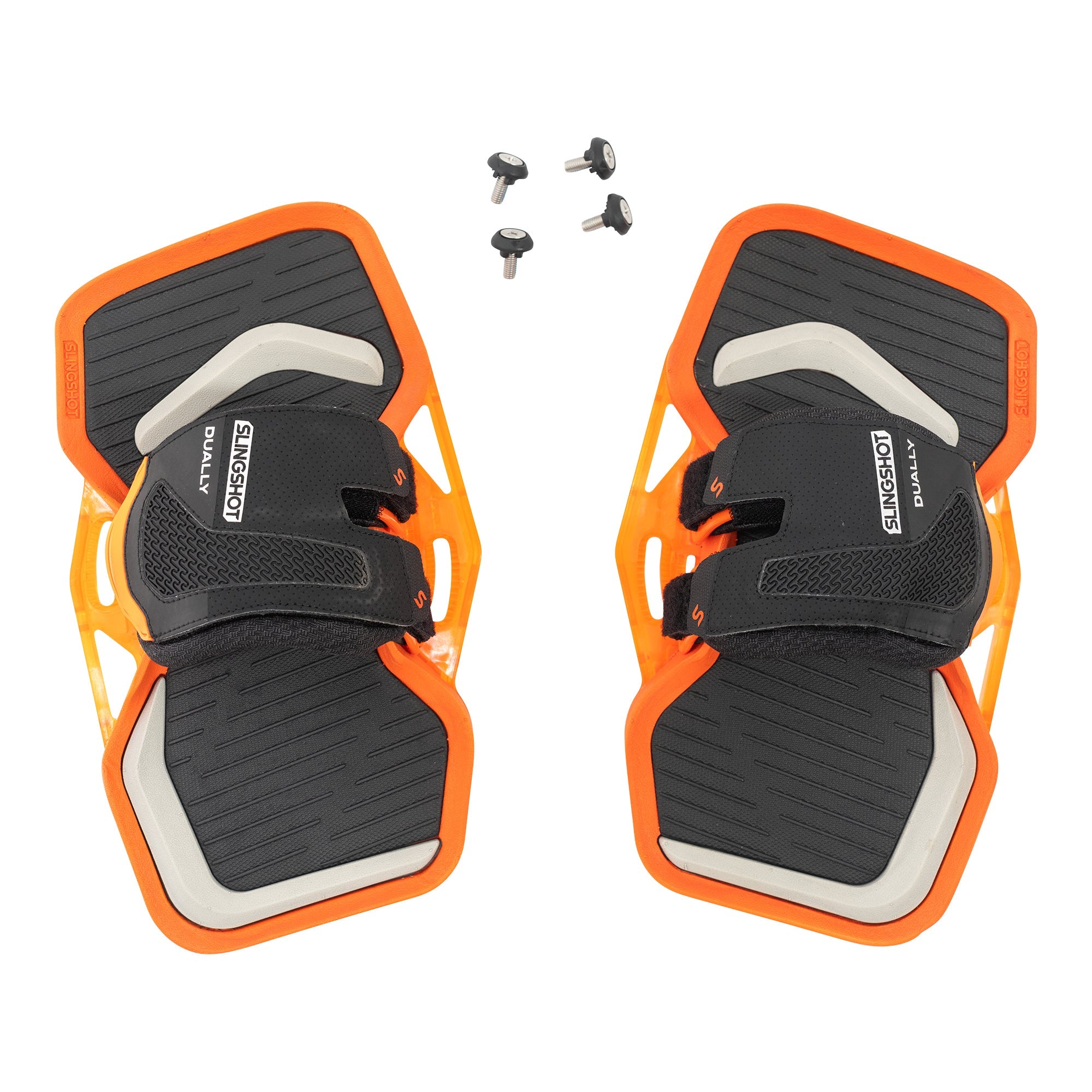
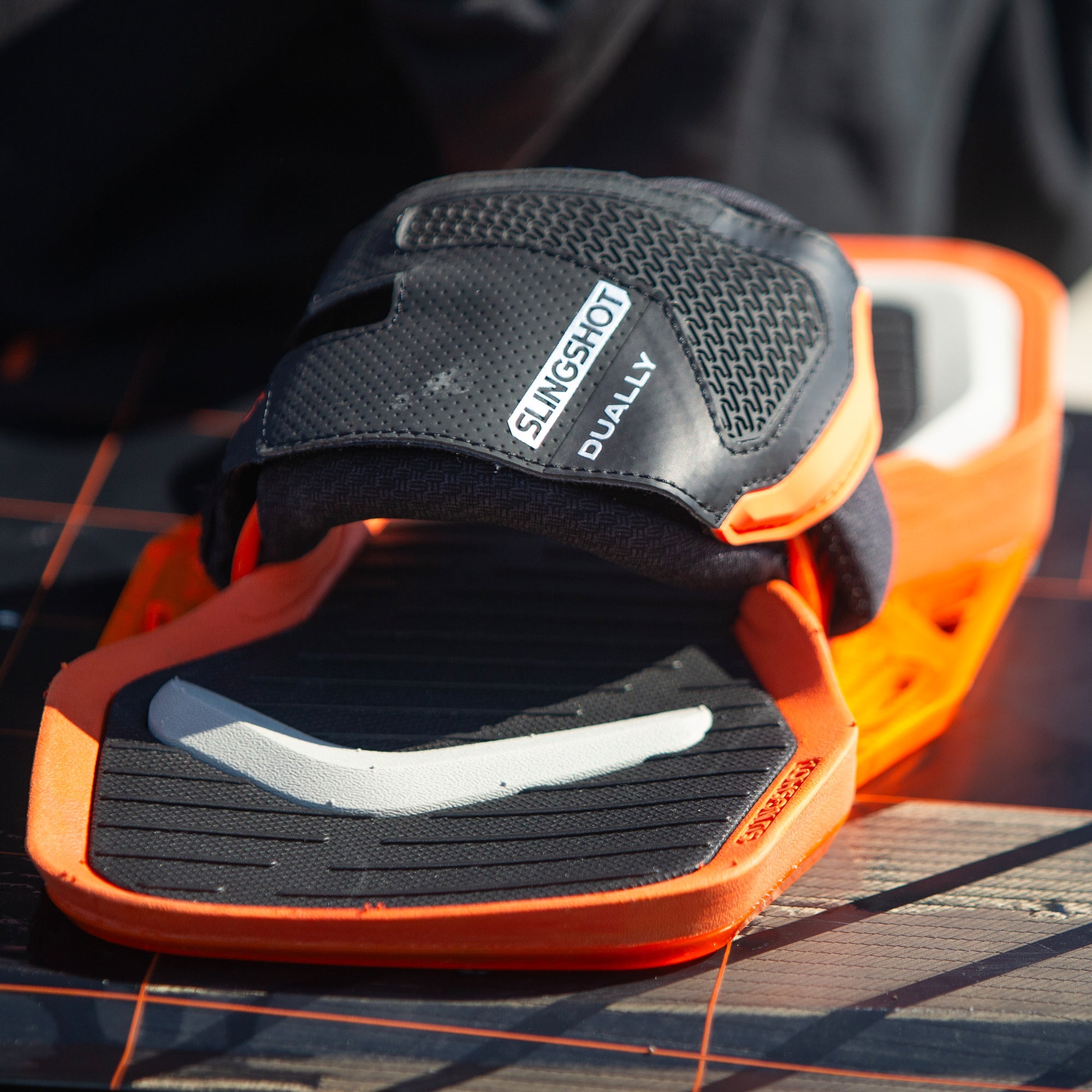
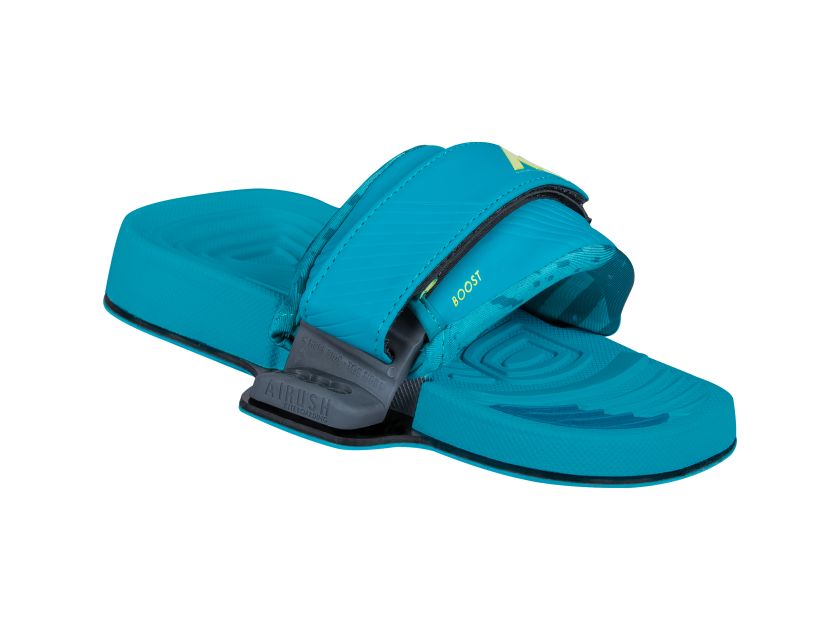
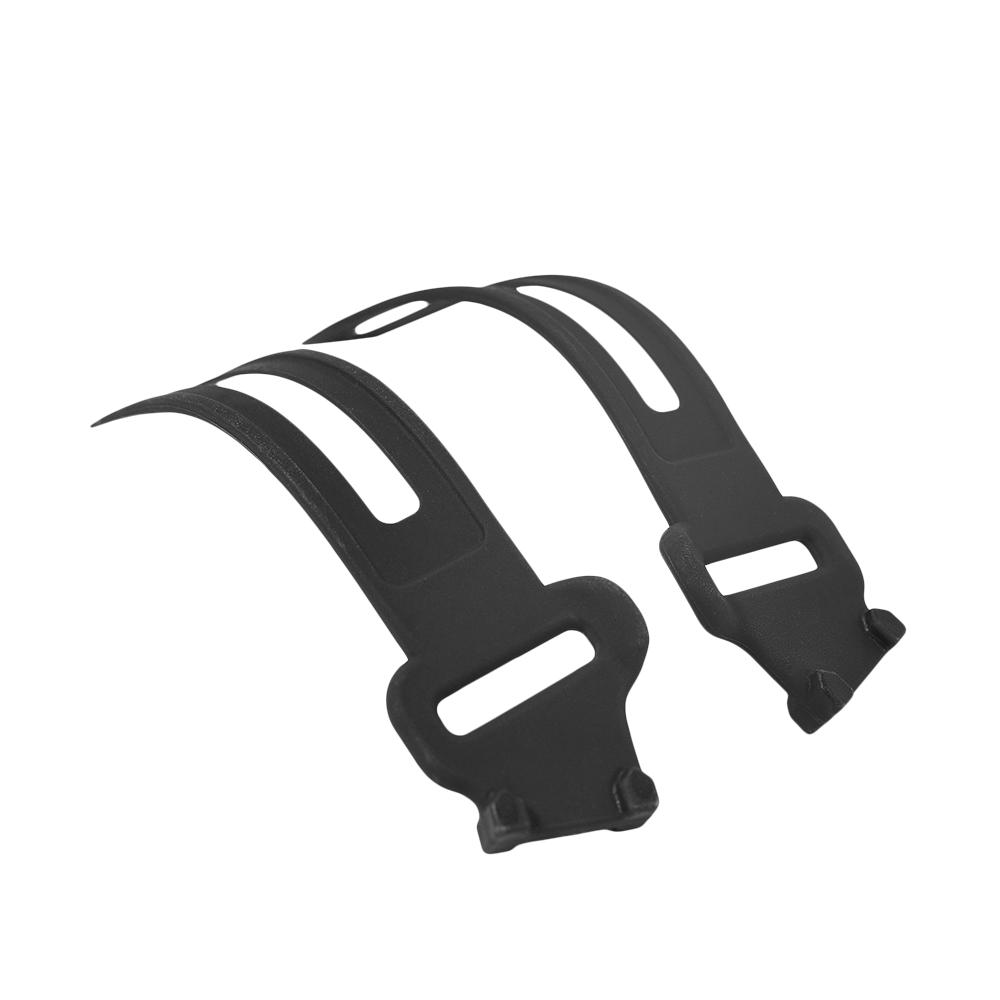
Bindings are not included with twintips — this allows you to choose the bindings that best suit your board and riding style. Some directional surfboards come with straps — check the product description.
Which brands does Frozen Palm Tree carry?
We stock kiteboards from the world's best brands — chosen for quality, innovation and durability. Including North, Duotone, Airush and Flysurfer.
Want to know more about a specific board or brand? Call us on +45 53 53 16 83, drop us a WhatsApp, or stop by the shop — we have personal experience with the gear we sell and will help you find the right board.